spurious sound filter
Design of a spurious sound filter using a half-wavelength resonator analogy for accurate parametric array loudspeaker measurements.
Synopsis (Kim† et al., 2025)
Accurate measurement of audio signals generated by parametric arrays is often compromised by unwanted intermodulation distortion on the microphone12. While the necessity for a robust spurious sound filter is critical, effectively filtering high-frequency ultrasonic waves presents significant challenges. Traditional filtering methods have been widely utilized, but achieving a consistently high transmission loss (TL) has proven difficult. Furthermore, a filter’s performance is often highly dependent on the sound wave’s angle of incidence. Although Helmholtz resonators generally provide excellent TL, scaling their dimensions for high frequencies becomes geometrically impractical due to physical inertance and compliance constraints. Alternatively, employing the principle of a half-wavelength resonator and measuring exactly at its acoustic node can yield a high TL at specific target frequencies. However, implementing this conventional straight-pipe structure directly onto a standard measurement microphone is physically challenging.
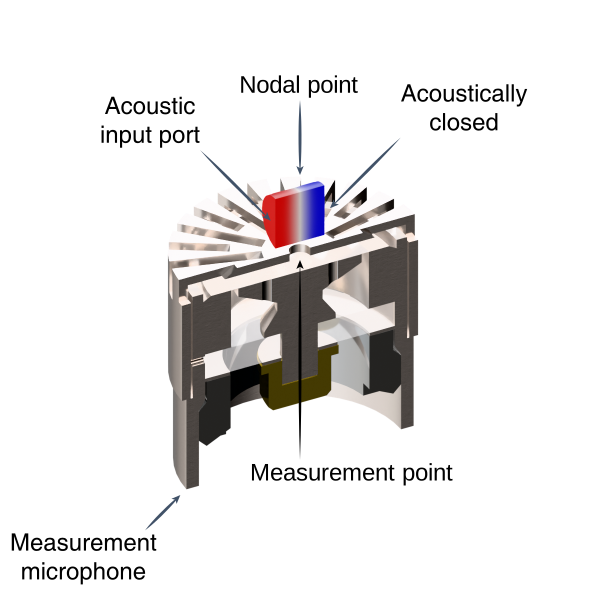
As illustrated, the extremely short half-wavelength at high frequencies makes direct integration mechanically unfeasible when compared to the physical dimensions of standard measurement microphones.
Idea
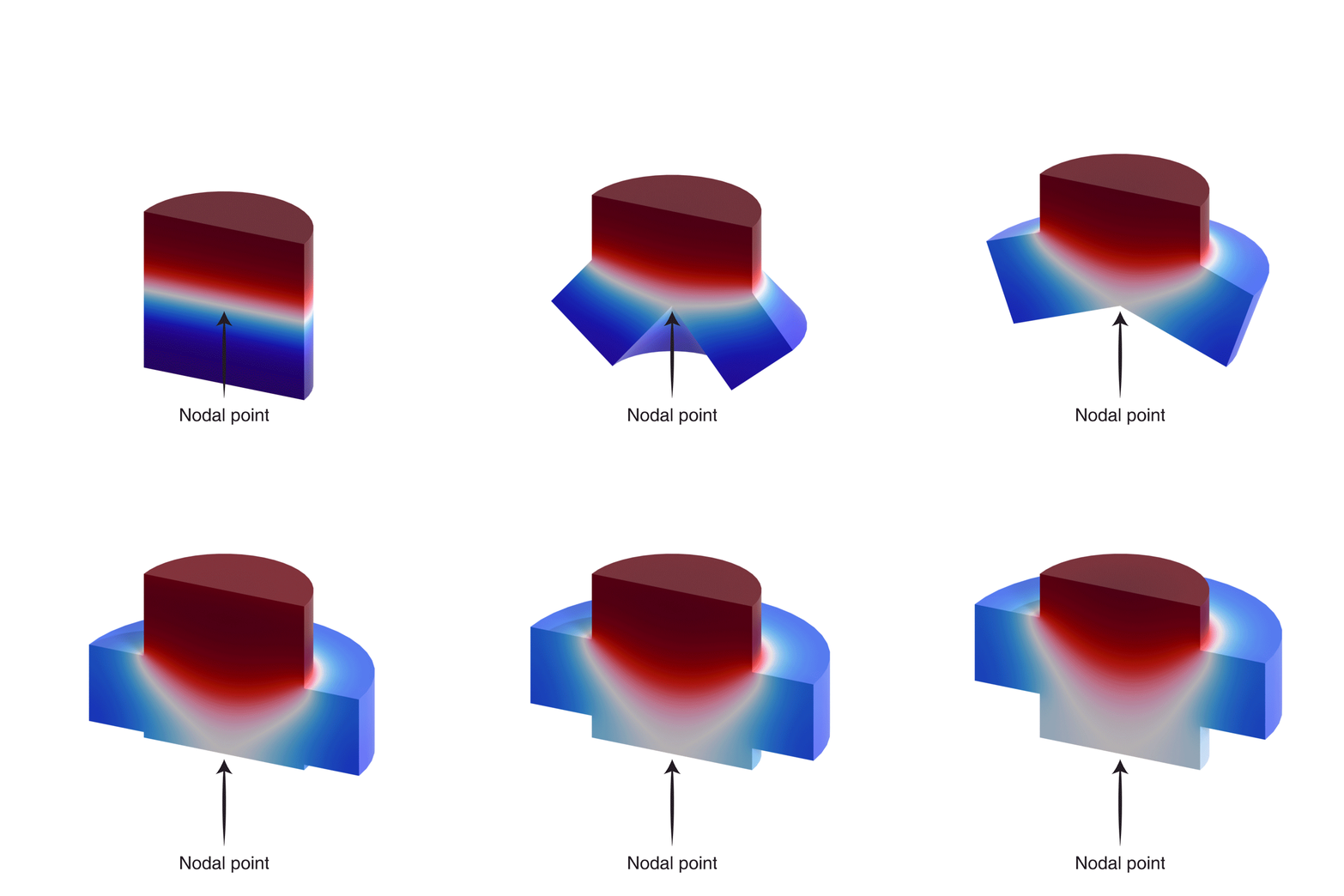
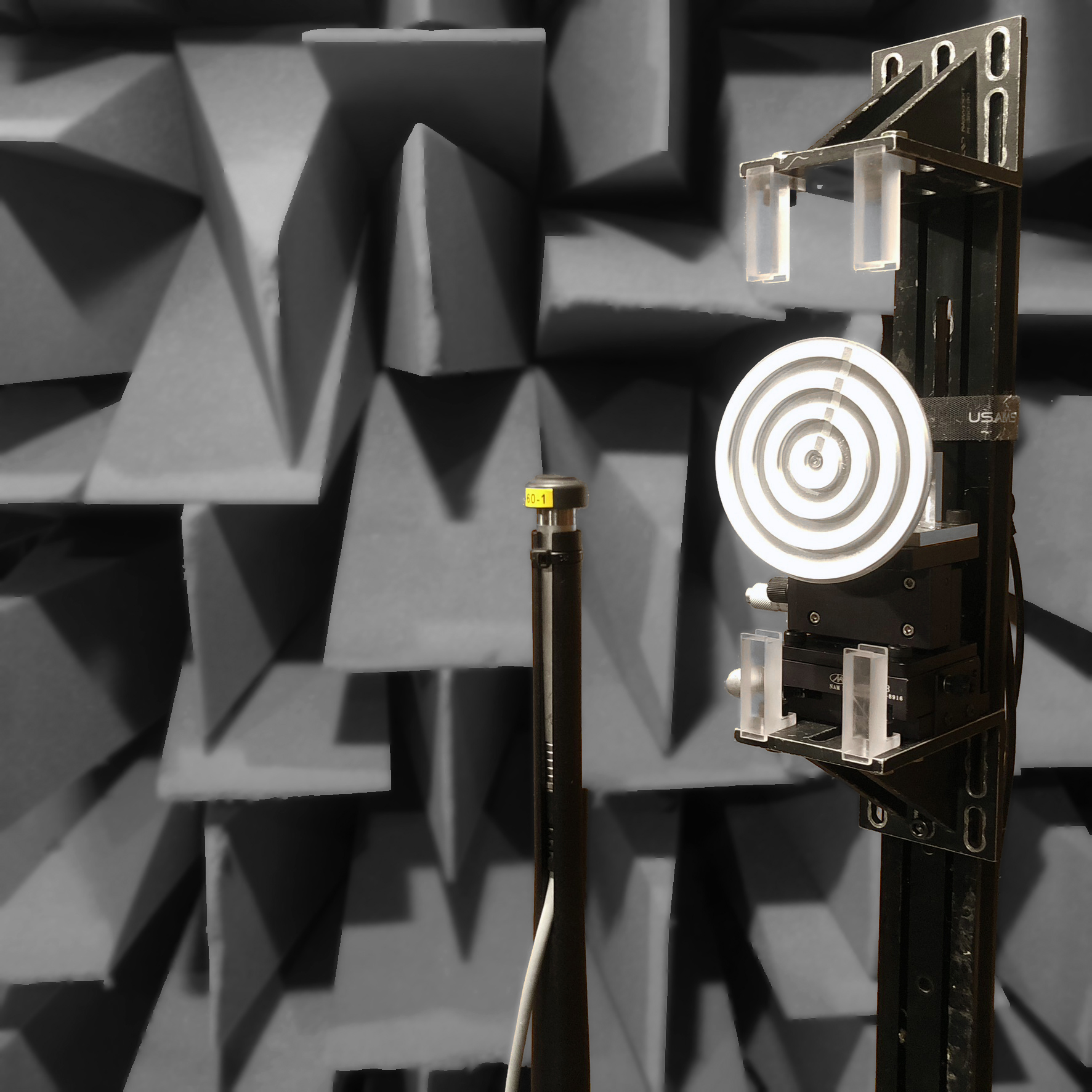
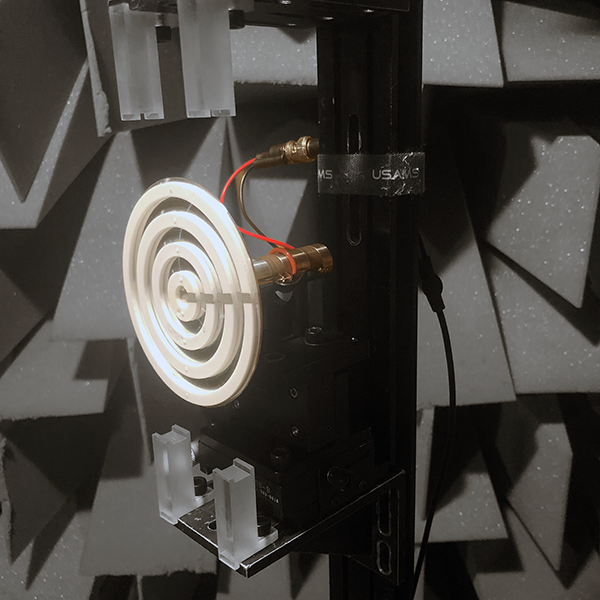
Designing a pragmatic filter based on this principle requires aligning the microphone diaphragm strictly with the acoustic node. Through the topological transformation illustrated above, the positions of the acoustic input port and the measurement port are optimized, enabling geometric integration with measurement microphones. The intricate design elegantly accommodates the contours of the microphone’s existing protection grid. Although the geometry physically resembles a conventional acoustic low-pass filter, its underlying resonance principle is fundamentally distinct.
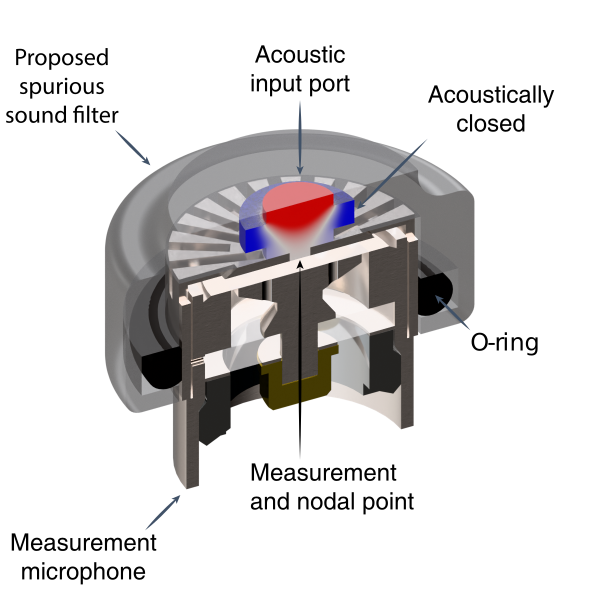
The engineered half-wavelength resonator adapts perfectly to standard 1/2-inch measurement microphones. Furthermore, optimized for design for manufacturing (DFM), the complex internal geometries can be precisely fabricated using stereolithography (SLA) 3D printing. This successfully realizes the half-wavelength resonance principle, achieving substantial TL at the desired frequencies.
We effectively utilized this filter to evaluate the parametric array loudspeakers we researched and developed, demonstrating excellent agreement with the simulation results (Kim et al., 2025; Kim† et al., 2026).
Research Contributions
- Proposed an acoustically equivalent half-wavelength resonator serving as a novel acoustic filter, effectively isolating the microphone from targeted high-frequency ultrasound.
- Achieved robust suppression of spurious sounds across all incidence angles, ensuring highly reliable acoustic measurements unaffected by wave directionality, which significantly enhanced the complex near-field measurement of parametric arrays when combined with the grazing incidence method.
- Established a simple, reproducible ultrasonic filter by utilizing SLA 3D printing technology, greatly facilitating widespread practical application in acoustic laboratories. We provide the STL file link as: https://zenodo.org/records/15055891.
References
-
M. T. Abuelma’atti, “Improved Analysis of the Electrically Manifested Distortions of Condenser Microphones,” Appl. Acoust., vol. 64, no. 5, pp. 471–480, 2003. DOI: 10.1016/S0003-682X(02)00140-8. ↩
-
M. B. Bennett and D. T. Blackstock, “Parametric array in air,” J. Acoust. Soc. Am., vol. 57, no. 3, pp. 562–568, 1975. DOI: 10.1121/1.380484. ↩
Related works
2026
- Dual-domain metamaterials co-integrated with a compact ultrasonic transducer for highly directional audio generationNature Communications, May 2026Media coverage International
EurekAlert!
Tech Xplore
Nanowerk
Hackster
Ny Teknik
Techno
Digital Trends
Interesting Engineering
Gadget Review
Mapping Ignorance
DongA Science Korean
Yonhap News
The Dong-A Ilbo
The Kyunghyang Shinmun
YTN Science
Newsis
KPI News
Daegu MBC
Pohang MBC
TBC
Joongdo Ilbo
KIPOST
Newsworks
Gyeongbuk Maeil
Gyeongbuk Shinmun
Gyeongbuk Domin Ilbo
Gyeongbuk Ilbo
Daekyung Ilbo
Veritas Alpha
Korea University News Video
 YTN Science
  Pohang MBC Radio
 KBS 1Radio
2025
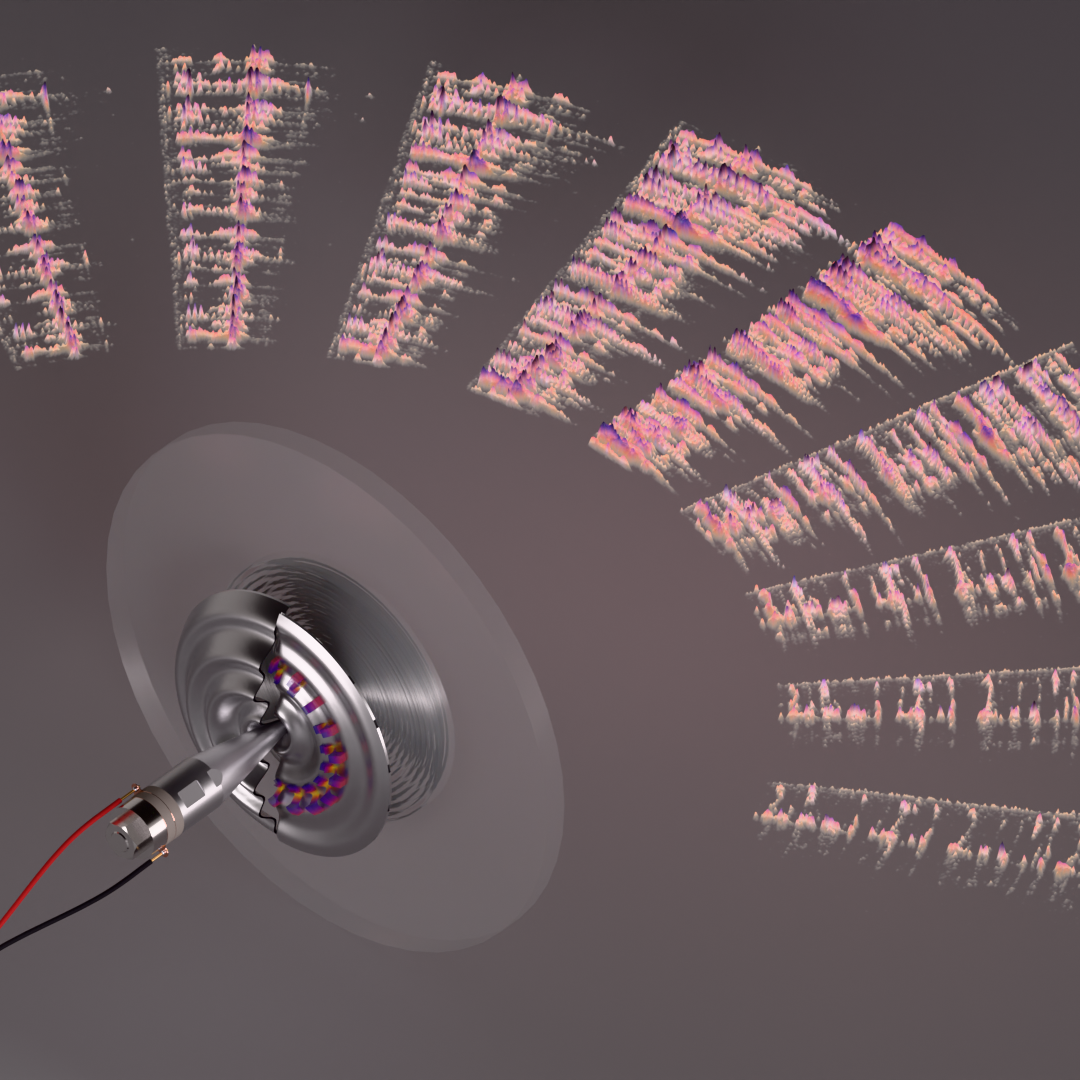
- An Accurate Measurement of Parametric Array Using a Spurious Sound Filter Topologically Equivalent to a Half-Wavelength ResonatorApplied Acoustics, Dec 2025
- Design, Analysis, and Experimental Validation of a Stepped Plate Parametric Array LoudspeakerThe Journal of the Acoustical Society of America, Sep 2025
Disclaimer: The contents provided on this page are for personal, academic, and non-commercial use only. Copyrights and all other rights are maintained by the respective authors or publishers. These materials may not be reposted without the explicit permission of the copyright holder.