research workflow and technology stack
Systematic research methodology integrating COMSOL multiphysics simulation, MATLAB-based modeling, and scalable data infrastructure for acoustic transducer development.
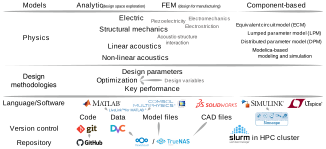
This infographic outlines the integrated methodology and technical infrastructure that underpin my research and development processes. It highlights a systematic approach bridging analytical modeling, high-fidelity simulations, and scalable data management to accelerate scientific discovery and engineering innovation. The diagram covers the modeling, simulation, and data side of that workflow; the measurement side — building a setup suited to the experiment and orchestrating the instruments into one automated system — is documented on the acoustical field and mechanical vibration characterization pages.
Models
- Analytic model - Enabled low-cost design space exploration by establishing relationships between design parameters and key performance metrics.
- FEM model - Applied for high-fidelity simulations and design for manufacturing, validating performance with practical prototypes.
- Component-based model - Implemented using Simulink, Simscape, and LTspice to capture multiphysics behavior, an approach particularly suited when modularity, hierarchy, and extensibility are required.
Languages/Software
- MATLAB COMSOL Multiphysics SolidWorks
Integrated workflow: developed analytical models and applied optimization algorithms in MATLAB, automated FEM simulations through COMSOL LiveLink, and generated parameterized CAD geometries in SolidWorks for iterative design validation. - Simulink/Simscape (Modelica-based) - Component-based system modeling for transient, multi-domain simulations.
- LTspice - Applied for electrical and electronic circuit simulations as well as multiphysics system studies, using distributed- and lumped-element models.
Infrastructure & Version Control
- Git & DVC - Managed source codes, simulation scripts, collaborative development, and tracked large datasets.
- GitHub / Nextcloud / TrueNAS - Deployed these scalable data infrastructures from the ground up to accelerate research and development workflows.
- Slurm & HPC Clusters - Managed resource allocation and batch job scheduling on High-Performance Computing clusters to accelerate high-fidelity FEM simulations.
Disclaimer: The contents provided on this page are for personal, academic, and non-commercial use only. Copyrights and all other rights are maintained by the respective authors or publishers. These materials may not be reposted without the explicit permission of the copyright holder.